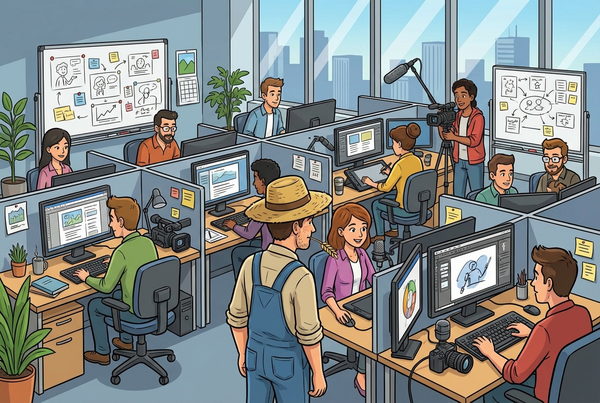
The Toolbox Doesn't Make the Carpenter
Having been in product management as long as I have, the evolution of the tools that do product management tasks, and while they are slick, they don't make you a product manager.

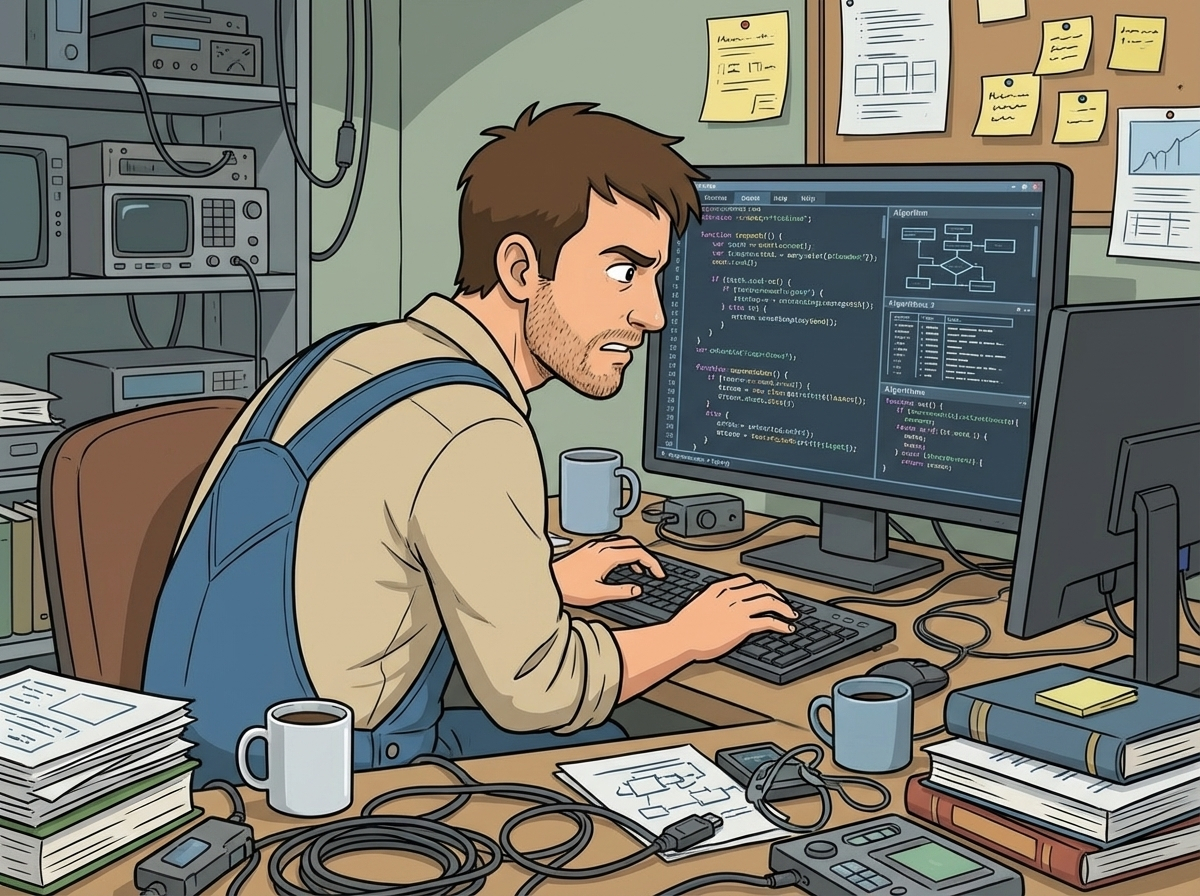
There is a seductive trap in modern product management, and I've watched a lot of otherwise smart people fall right into it.
The trap looks like productivity. It presents itself as rigor. It has a polished UI, a clean Kanban board, a perfectly groomed backlog, and a beautifully annotated Miro board that could win a design award. What it doesn't have, in too many cases, is a product manager who can actually run the business.
Let me back up.
Over the past decade or so, the tooling ecosystem around product management has exploded into something genuinely impressive. We have Aha! and Rally for roadmapping and workflow. Jira and Confluence doing heavy lifting on the execution and documentation side. Miro for visual collaboration. Figma for prototyping. Productboard for customer feedback synthesis. The list keeps growing. For a role that used to run on sticky notes, whiteboards, and a lot of hallway conversations, it's a remarkable tapestry of riches.
And here's the thing: most of these tools are genuinely good. They solve real problems. They create structure where there used to be chaos, and they give distributed teams a fighting chance at staying aligned. I use them. I appreciate them.
"The tools are there to serve the strategy. When the strategy starts serving the tools, you've got a problem."
The problem isn't the tools. The problem is what happens when the tools become the job.
The Wizard Behind the Keyboard
I've been around long enough to watch a few waves of "this changes everything" wash over the product management world. Each time, a subset of practitioners latch onto the new capability with both hands and go deep. That's not inherently bad. Deep proficiency with your workflow tools is a real asset.
But I'm seeing something now that concerns me: a generation of product managers who are absolute wizards at the tooling, and genuinely lost everywhere else.
They can build a roadmap in Aha! that would make a consultant weep with joy. Their user stories are perfectly formatted, acceptance criteria locked down tight, every dependency tagged and linked. The sprint board is clean. The metrics dashboard is crisp. Everything is accounted for.
Then the quarterly business review hits, and they can't articulate why the product exists in a way that moves anyone. Engineering pushes back on a priority call, and the negotiation falls apart because there's no business case behind the ask, just a ranked list in a tool. A sales team says the product isn't landing in the market, and there's no answer, just a shrug and a link to the roadmap.
The tools didn't fail them. They were never equipped for the parts of this job that tools can't touch.
What Product Management Actually Is
Here's what I've learned across nearly three decades in this role, from semiconductor capital equipment to nanotechnology to networking: product management is, at its core, a persuasion job wrapped around a strategy job.
You must know the business. Not just the product. The business. The revenue model, the competitive dynamics, the customer's actual pain versus their stated want, the constraints the engineering team is operating under, the pressure the sales team is carrying. You have to synthesize all of that into a coherent direction, and then you have to sell that direction, up, down, and sideways, to people who have competing priorities and every reason to push back.
No tool does that for you. Period.
I've sat across the table from engineering leads who could dismantle a poorly reasoned prioritization argument in about ninety seconds. I've watched product managers crumble in that moment because their entire case was "it's ranked number one in Jira." That's not a business case. That's a database entry.
"The product manager who can't explain why something matters, in plain language, to a skeptical audience, is not a product manager. They're a backlog janitor."
That might sting a little. It's still true.
The Consensus Problem
Beyond the strategy question, there's something even harder: alignment.
Getting an organization to move in the same direction is genuinely difficult work. It requires building trust with engineering over time, not just submitting tickets. It requires understanding what sales needs to close deals, not just what customers say they want. It requires reading the room with executives and knowing when to push and when to listen. It requires being the person who carries context across boundaries that most people never cross.
That skill set is built through experience, curiosity, and frankly a certain amount of failure. It doesn't come from mastering a roadmapping tool. And it doesn't show up in a certification, either, though the industry keeps trying to convince people it does.
The technology product management world has a real problem with this. We have built an entire ecosystem of courses, certifications, frameworks, and tooling that can make someone look like a product manager while they're still missing the core of it. Outputs are not outcomes. Artifacts are not strategy. A beautifully structured product requirements document in Confluence is only as valuable as the thinking that went into it.
What I'd Tell a Junior PM
If you're early in the role, learn the tools. Become proficient. Understand how they work and what they're good for, and where they're just theater. That knowledge matters.
But then go further.
Go sit with customers, not run a survey, but to actually understand their world. Get comfortable being in rooms where people disagree with you and hold your ground when you're right. Build real relationships with your engineering counterparts, the kind where you can have a blunt conversation without it turning into a standoff. Study your company's P&L. Understand the market forces that keep your executive team up at night.
Do the hard, slow work of developing judgment. Because when a crisis hits, and one will, no one is going to ask you to pull up the Miro board.
The Tool is the Hammer, Not the House
I want to be fair here. There's nothing wrong with being good at your tools. Execution discipline matters. Clean process matters. And the organizational clarity that good tooling enables is not nothing.
But the tools are infrastructure. They are plumbing. They hold things up. They don't provide the vision, the conviction, or the judgment to know what to build and why it matters to someone's business or life. That has to come from the person holding the hammer.
The best product managers I've worked with over the years weren't the ones with the cleanest boards. They were the ones who could walk into a room of skeptics and walk out with a committed team. The ones who understood the business well enough to make hard calls and defend them under pressure. The ones who, when the data was ambiguous, had enough earned credibility that people trusted their read.
None of that lives in a SaaS subscription.
You can have every tool in the stack and still be flat-footed when it counts. Or you can do the harder, less visible work of actually developing the craft, and the tools will serve you well.
The toolbox doesn't make the carpenter. The years of practice, the scars, the judgment, that's what makes the carpenter.
The tools are just a nice way to keep the shop organized.
Have a take on this? Drop it in the comments below.