Product Management, Meet Winston Wolf
You don’t involve Winston Wolf if you have a "strategy." You call Winston Wolf to handle a messy shit sandwich and after it's handled, Winston Wolf does not call you back or visit you. And product managers around the world are nodding their heads right now.

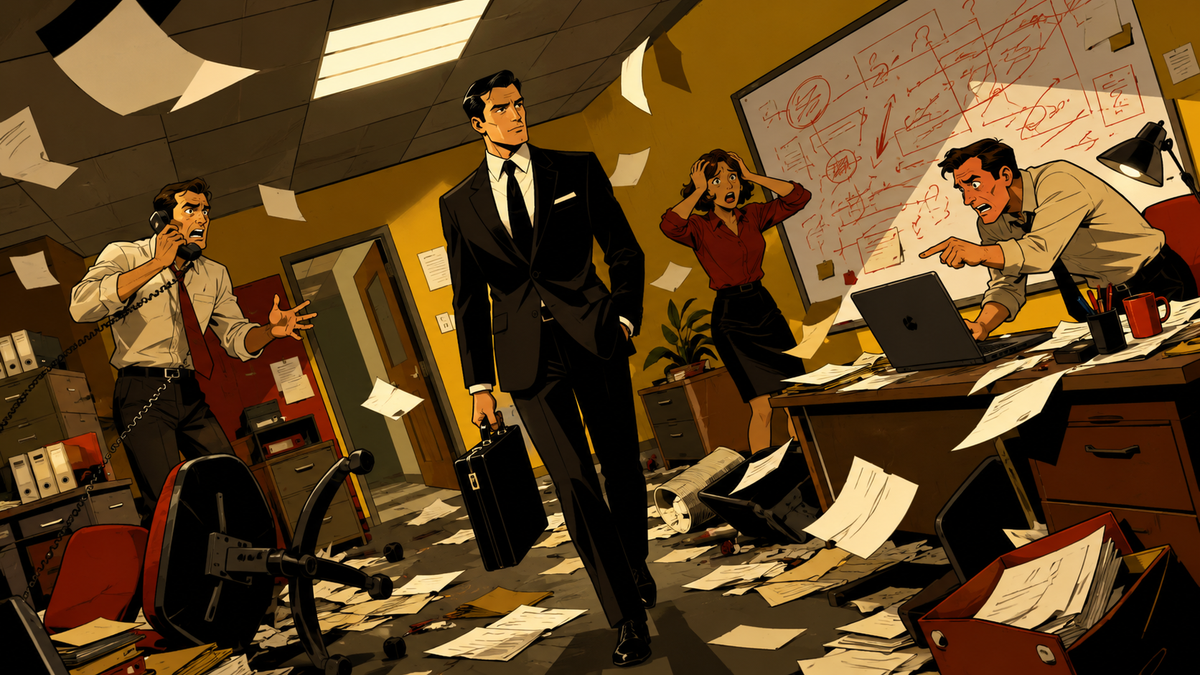
If you've seen Pulp Fiction, you know the scene: Jules and Vincent have a mess on their hands, way outside their ability to clean it up, and the man who gets the call is Winston Wolf. He parachutes in, rallies everyone into motion, gets the mess handled, and disappears just as fast. No ceremony, no lingering — just "solved" and gone.
That's product management more often than we like to admit.
We tell ourselves — and we tell interviewers — that our core value is market insight, technical depth, and long-range strategic thinking. And every single interview process I've been through leans hard into that framing: the strategy you'll own, the roadmap you'll shape, the multi-year thinking you'll bring. Then you take the job, and within a quarter it quietly becomes a firefighting role. There's a backlog nobody's worked through. Support has issues piling up. Development, manufacturing, and support are in some flavor of disagreement and someone needs to referee it. Sales has learned that "product management" is the fastest way to get an answer from the factory floor, and somehow every deal qualifies as the exception that needs you personally.
Everyone wants a piece of your time, and none of them are wrong to want it.
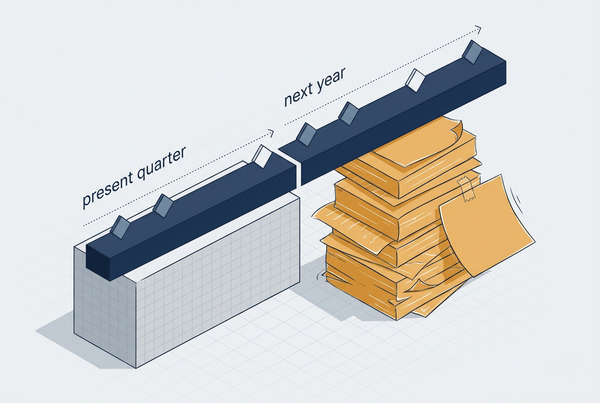
So the job settles into a rhythm of constant task-switching, with the long-term goals quietly losing ground to whatever's actually on fire this week. If you don't deliberately block time for lunch, that slot gets consumed too — I've stopped being surprised by this. It's close to a structural constant of the role, not a sign that something's being done wrong.
And there's a second constant worth naming: in my experience, the headcount allocated to product management is almost always somewhere around three-quarters of what the actual scope requires. Not zero, not wildly understaffed — just persistently, quietly short. Enough that everyone assumes it's fine, and just enough that it never quite is.
None of this means the strategic half of the job is a fiction — it's real, and it's the part that compounds over time if you protect any space for it. But if you're stepping into a PM role expecting Wolf's actual job description to be strategy, plan on doing at least as much of his other job: showing up when things go sideways, getting people moving, and getting it handled — cleanly enough that nobody has to ask how.
How close is your headcount-to-scope ratio to three-quarters? I'd bet it's closer than you think.