The Blank Line in the S-1 (Antrhopic)
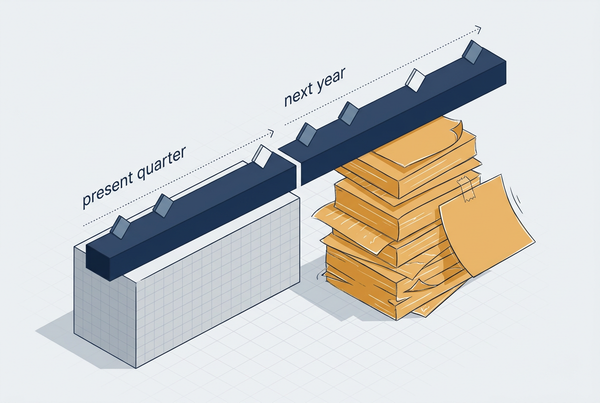
Anthropic's amended S-1 has an empty line where October's revenue should be. With a $1.5 trillion ask, $895B in compute commitments, and OpenAI's round coming up short, that blank is now the most important number in tech.

My company started pinching pennies over my $100-a-month Claude Enterprise spend (my actual token use) this week — a sum roughly equal to the lease on my laptop and my M365 license combined. Meanwhile, Anthropic is preparing to ask the public markets for as much as $100 billion. Only one of these numbers is about to get stress-tested, and it isn't mine.
This is the week the AI trade met its first real election.
Tuesday's midterms produced the usual single day of relief. Then Thursday happened. Roughly $3 trillion came off U.S. markets in one session, and the damage was not evenly distributed. Nebius, IREN, and CoreWeave have lost something like half their market capitalizations in a month. The neoclouds, the memory makers, the chip-financing structures, the IPO pipeline: the financing layer of the AI trade absorbed the beating, while Alphabet, Microsoft, Amazon, and Meta all fell less than the market.
What changed? Voters in multiple states approved measures restricting data center development. For two years the market priced AI capex as an unstoppable, federally sponsored program. This week it discovered the buildout has a political cost curve it never modeled: permitting fights, water and power battles, state-level regulation. Those are now permanent inputs to the discount rate, not tail risks.
And directly into the middle of this walks Anthropic, with what would be the largest IPO in history.
The ask, the numbers, and the blank
The roadshow was supposed to kick off the week of November 9, with pricing the following week and a listing before Thanksgiving. The ask, as recently discussed, was a valuation around $1.5 trillion and a raise of up to $100 billion. Except now, according to the Wall Street Journal, three major investors intending to participate say the valuation will have to come down — one suggested something closer to $1 trillion — and another raised the possibility of delaying the offering entirely.
Let me be fair to Anthropic for a paragraph, because the growth is real. Third-quarter revenue came in around $17 billion, up roughly 45–47% from the second quarter. Any other industry on Earth, that's a hallucination-grade growth rate. But Q2 was up about 145%. The second derivative matters when you're asking for $100 billion: sequential growth more than halved in one quarter, and the company still posted a $567 million operating loss.
Then there's the balance sheet of obligations. Anthropic's disclosed compute and infrastructure commitments with partners like Amazon and Google approach $895.4 billion, of which something like $70 billion matures within the next twelve months. This is the part of the S-1 that deserves more attention than the revenue line: a company with $17 billion in quarterly revenue has contracted for over half a trillion dollars of compute it hasn't paid for yet. The IPO isn't funding operations. It's funding the gap between contracted compute commitments and cash on hand — a gap that only stays bridged if the equity holds its value.
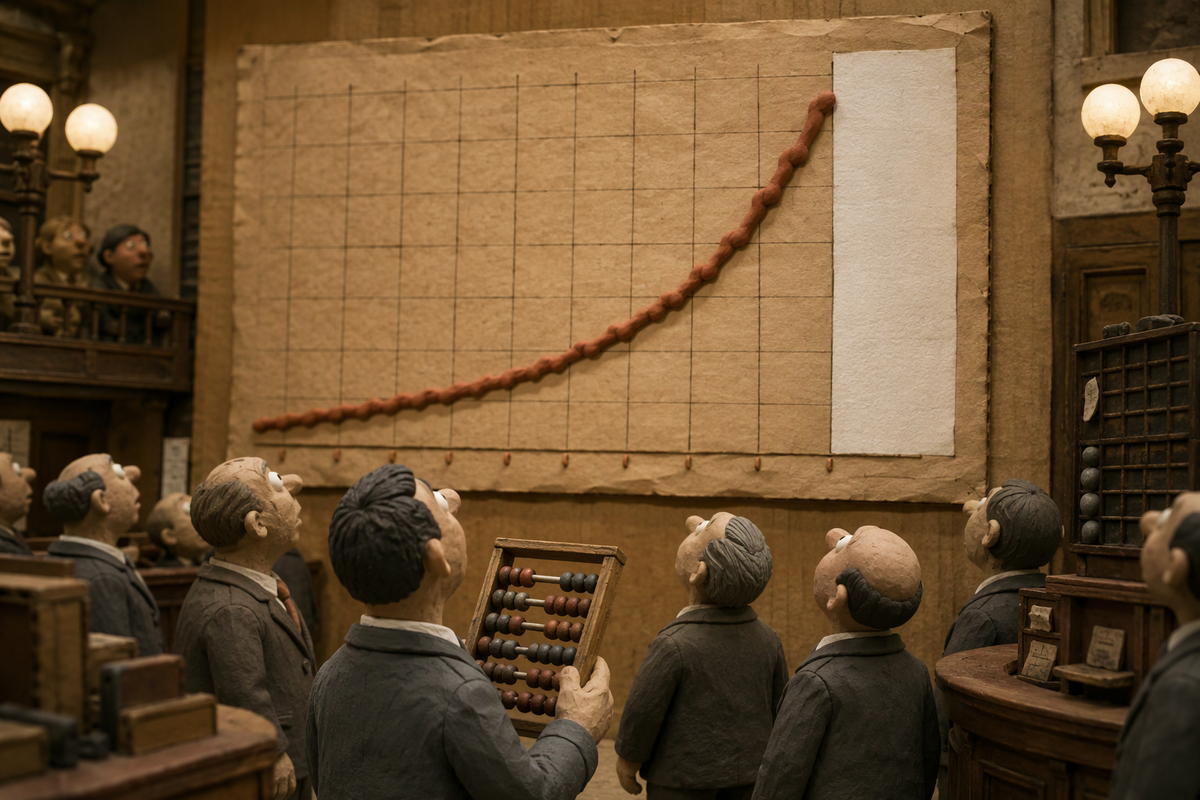
Which brings us to the blank. Anthropic's amended S-1, filed last week, contains an October revenue line that is empty. Not low. Empty. Investors are reportedly waiting for that single number before committing, and the company has effectively announced it will fill in the blank after the roadshow begins. Michael Burry, never one to pass up a disclosure oddity, has already published a Substack post picking apart the amended filing.
One number, holding up a $100 billion ask. If October prints flat-to-down against September, the $1.5 trillion ask is dead and everyone in the roadshow room knows it.
Product Bistro doesn't run on ad spend or an algorithm surfacing it in anyone's feed. It runs on PMs passing it to other PMs. If this issue was useful, forward it to someone on your team, or subscribe so the next one lands directly in your inbox.
Meanwhile, across the bay
OpenAI has been running its own funding drama in parallel. The reported target was $30 billion at a $1.25 trillion pre-money valuation. As of late October, roughly $11 billion of it had been committed. That's not a 33% shortfall; it might be more than 50%, and the first close is reportedly coming in below even the reduced target.
For two years the private-market pricing mechanism — small groups of motivated buyers, negotiated marks, friendly headlines — set AI valuations without any real check. Now that mechanism is finally being arbitraged against public-market skepticism. A PitchBook analyst had it right back in September: the number investors offered and the number OpenAI wants are different numbers, and nothing is priced. We are watching "nothing is priced" resolve downward in real time.
And the two labs are competing for the same pool of institutional capital, which is why Anthropic's timing problem is so sharp. Every week of delay lets the market's deterioration compound, hands the narrative to OpenAI's Astra launch, and — worst of all for a company asking the public to believe a half-trillion-dollar spending plan — visibly flinches at the window. My read: they can't afford not to go, and everyone involved knows it. Which is precisely why the pricing itself will be the confession. A company that must raise money and cuts its ask isn't showing weakness it can manage; it's showing information.
The margin pincer
Here's where my $100 seat comes back in, because it's the small end of the wedge.
My company isn't cutting Claude because it stopped working. It's treating model access as a metered utility cost to be governed, the same way it governs M365 licenses and laptop leases. Multiply that across every enterprise IT department that just discovered it has an AI budget to defend, and then add the other side of the market: routers that match the model to the complexity of the task, sending the easy 80% of traffic to cheaper models and reserving frontier models for genuinely hard problems. Vendor-published math on mixed routing claims cost reductions on the order of 70% or more against all-frontier traffic. Even if that's half true, it's transformative.
The labs' response has been to cut prices to defend share. Anthropic cut Haiku 5.5 pricing by roughly 75% after the third quarter closed, and halved Sonnet cache-read prices. Google, Microsoft, and Meta don't need to care: for them, inference pricing is a weapon. They can price at or near cost because the model sells cloud capacity, M365 seats, ads, and silicon they own. Meta and Microsoft are reportedly cutting their own internal Claude spend in favor of their tooling.
So picture Anthropic's position: fixed, contracted, rising compute costs above; commoditizing, deflating output prices below. Revenue per unit of intelligence falling while the input bill is locked in. The market is repricing the labs from "software companies" to what they actually are: capital-intensive, price-taking model foundries. Scale helps a foundry. It does not guarantee its margins.
The geopolitical tail risk gets a body
One more thread from this week, and it needs careful language because the reporting is early. The New York Times reported that U.S. intelligence officials concluded an executive at a Singapore-based data center company, identified as Alice Huang of Megaspeed, was passing information to Beijing and had developed a close relationship with Jensen Huang — no relation. Nvidia's response was categorical: its CEO talks with thousands of customer executives a year, regional cloud customers receive ordinary business information, and "zero information relevant to national security" is shared. Nobody has been charged, and the coverage does not establish what, if anything, was taken.
What the episode reveals regardless: export-control politics around AI chips is about to get noisier and less predictable, right as the largest IPO in history prices a business whose suppliers, customers, and guarantors are all entangled with the same geopolitics. Nvidia is the one company whose earnings anchor the entire trade. A louder, less predictable export-control regime is not priced anywhere.
What the tape told us
Strip the week down and the pattern is almost elegant. The selling hit the financing layer — the IPO valuations, the credit structures, the neoclouds, the leveraged plays — hardest. It did not hit the technology. The hyperscalers with real cash engines fell less than the market. Investors are not saying they stopped believing in demand for AI. They're saying they stopped believing in the funding math at current valuations.
That's a much milder verdict than "the bubble burst." Yardeni's line — an AI bubble losing some air very, very rapidly — is probably the right frame. But milder is not nothing. The Anthropic IPO, whenever it prices, is about to become the largest real-time price-discovery event in the history of tech. If it clears north of $1.3 trillion with real demand, some air goes back in. If it slips toward $1 trillion, OpenAI's $1.25 trillion private mark reprices next, and then the whole stack of circular financing — the vendor financing, the guaranteed bank facilities, the SPVs — gets renegotiated from weakness.
The blank line in the S-1 gets filled in the next few weeks, and the whole market is staring at it.
What do you think October prints? Tell me in the comments — I read them all.
Sources: Wall Street Journal via Yahoo Finance, Jerusalem Post summary of WSJ reporting, TradingKey on the amended S-1, Benzinga, ABC News on the Nvidia report, Tech Insider on the OpenAI round, Xeno Spectrum on Q3 and post-quarter pricing.