Toxic Product Management
Toxic product management isn't rare — it's just rarely named. After watching one particularly bad case unfold firsthand, here's what actually lets unsuited PMs into roles where they can do real damage.

There's no shortage of good product management advice out there. Teresa Torres on discovery, Rich Mironov on the org-design traps, a dozen other sharp practitioners writing about how to actually do this job well. Read enough of it and you start to believe the profession has more or less figured itself out.
Then you run into a toxic product manager, and you remember it hasn't.
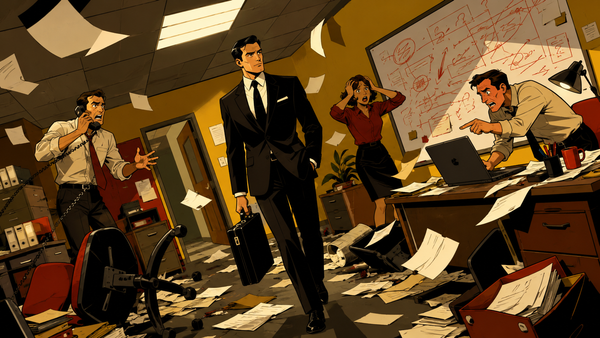
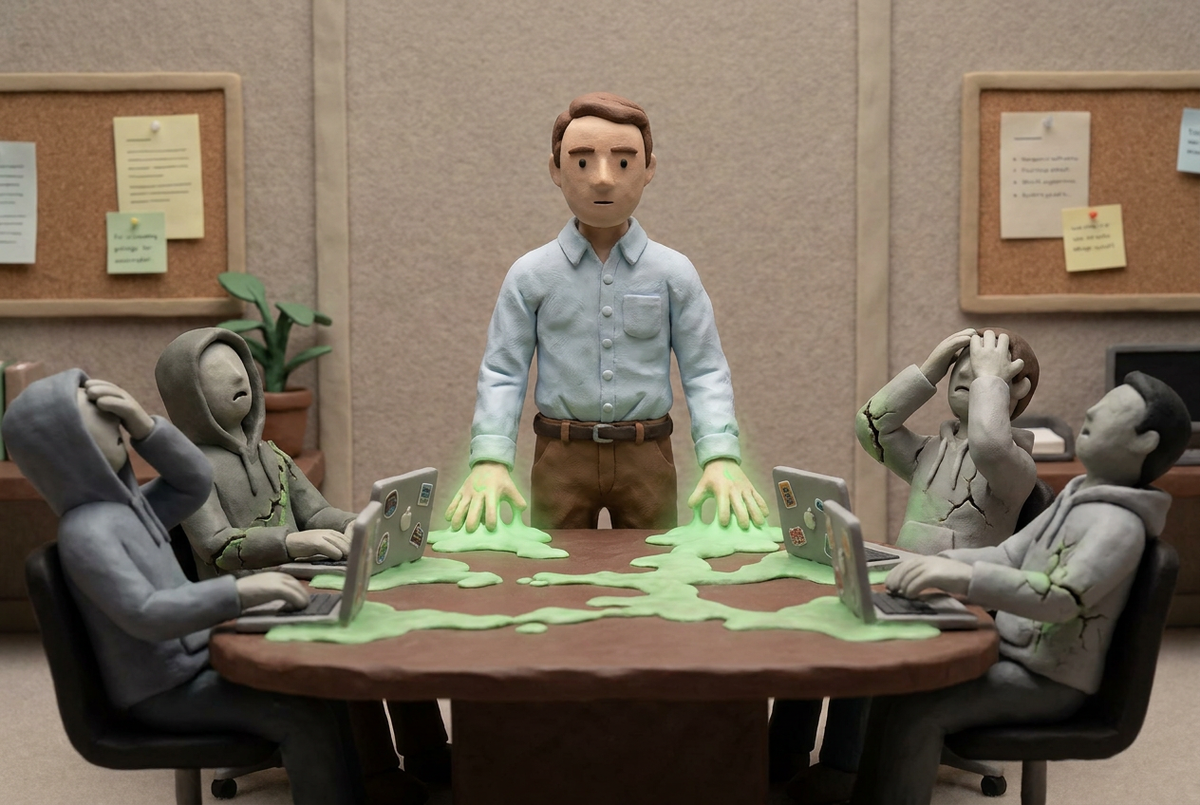
I mean a specific kind of bad: not "still learning the craft," but someone who fails to motivate their engineering team and then, worse, actively antagonizes them. Someone who plays priorities as a power game instead of a shared problem, or who shows up with 11th-hour "must-have" demands that blow up a launch nobody saw coming. Instead of product being the trusted partner in the room, it becomes the thing the team has to manage around.
I used to think this was rare — a fluke, a bad-apple outlier. It isn't. I've spent time cleaning up after exactly this kind of product manager: someone who was hands-off through the build, offered almost no upfront direction, then showed up at the end with heavy-handed, late-stage demands — to the point where the team didn't trust the manager's own release sign-off and quietly re-ran regression testing themselves before shipping. That's not a process failure. That's a trust failure, and trust is the expensive thing to rebuild.
Spend any time on a site like Slashdot, and you'll find engineers venting about exactly this — product management as obstacle rather than ally. It's easy to write those threads off as unrepresentative comment-section griping. I don't think they are. I think toxic product management is far more common than the profession likes to admit, and every one of those threads is a data point we'd rather not count.
So how do genuinely unsuited people end up in a role where they can do this much damage? A few patterns keep showing up:
- Hiring for technical depth over product judgment. Being closest to the technology isn't the same as having the interpersonal skills, the influence-without-authority skills, or the communication skills the role actually runs on. Call it "smartest person in the room" syndrome — it reliably produces a team you could cut the tension in with a knife.
- No institutional home for product leadership. If product reports into an org with no real practice or philosophy of product management, you're going to have a bad time. And if it reports into a pure revenue function — sales or ops — that's close to worst case: the role gets bent toward short-term deal-saving instead of strategic judgment, because that's what the org around it rewards.
- Hiring the wrong personality, not just the wrong skill set. This is distinct from the first point. An "asshole" can be a genuinely effective salesperson — close the deal, move to the next one, let someone else clean up the wreckage. Product management doesn't have that escape hatch. It demands sustained engagement, real empathy, the skill of getting people to yes, and the willingness to compromise and keep moving. I've watched more than a few power-hungry product managers do real organizational damage and walk away from it, leaving other people to patch things up.
There are probably more patterns than these three. Over three decades in this field, I've watched the discipline mature enormously — the definition of the role, the skill-building, the sheer number of genuinely excellent product managers now in the world. That progress is real.
But the toxic tail hasn't gone away. It's still spoiling team dynamics, burning trust, shipping garbage, and — infuriatingly often — getting promoted for it. Every time I read another engineer's account of how corrosive their relationship with product has become, it lands. That's not a branding problem for the profession. It's a hiring and accountability problem, and it's still ours to fix.
Curious what patterns you've seen — reply and tell me your worst toxic-PM story.